If you’ve been searching for how to reduce anxiety naturally, chances are you’re tired of the racing heartbeat, the 2 a.m. overthinking, and the feeling that your own mind has become a little unsafe to be in. You’re not broken, and you’re not alone. Anxiety is one of the most common struggles people quietly carry – and the good news is that you don’t need to depend entirely on medication to feel calmer. With the right daily habits, a bit of nervous-system know-how, and tools like NLP and hypnotherapy, real and lasting relief is possible.
I’m Srikant Rath, a Hypno-NLP coach and anxiety relief expert, and in this guide, I’ll walk you through exactly how to reduce anxiety naturally – using methods I use with my own coaching clients every week. No fluff, no jargon, just practical steps you can start today.
Table of Contents
What Is Anxiety, Really?
Before we jump into solutions, it helps to understand what anxiety actually is. At its core, anxiety is your nervous system’s alarm bell. It’s designed to protect you from danger — but in the modern world, that alarm often goes off over emails, deadlines, relationships, or thoughts about the future that haven’t even happened yet.
The problem isn’t that you have an alarm system. The problem is that it’s become oversensitive, going off when there’s no real threat in the room. The techniques below are designed to gently retrain that alarm system so it only sounds when it truly needs to.
How to Reduce Anxiety Naturally: 7 Techniques That Actually Work
These are practical, science-informed, and coaching-tested ways to reduce anxiety naturally. You don’t need to do all seven at once — pick one or two, practice them consistently, and build from there.
1. Breathwork: Your Built-In Reset Button
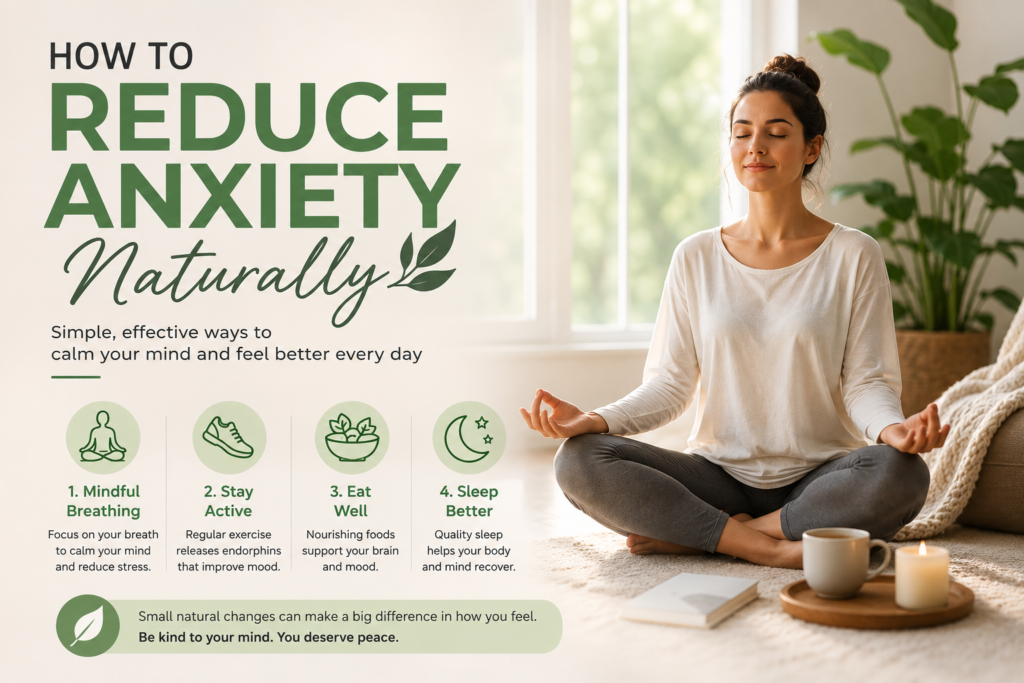
Your breath is the fastest bridge between your mind and your nervous system. When anxiety spikes, your breathing becomes shallow and fast, which tells your brain, “we’re in danger.” Reversing that pattern reverses the signal.
- Try the 4-7-8 method: inhale for 4 counts, hold for 7, exhale slowly for 8.
- Practice for just 2 minutes when you notice tension building.
- Do it before bed to quiet a racing mind.
This is one of the simplest ways to reduce anxiety naturally because it works with your body, not against it.
2. The NLP Reframe: Change the Story, Change the Feeling
As an NLP coach, this is one of my favorite tools. Neuro-Linguistic Programming (NLP) is based on a simple idea: the way you mentally represent a situation changes how you feel about it. Anxious thoughts often sound like, “What if this goes wrong?” A simple reframe technique shifts the internal question to something like, “What would it look like if this went well?”
This isn’t about forced positivity. It’s about interrupting the anxious pattern before it spirals, which is a core part of NLP for anxiety work.
3. Move Your Body to Shift Your State
Anxiety lives in the body as much as the mind. A 20-minute walk, some light stretching, or even dancing in your kitchen can lower cortisol and burn off excess adrenaline. You don’t need an intense workout – consistent, gentle movement is one of the most underrated forms of natural anxiety relief.
4. Protect Your Sleep Like It's Non-Negotiable
Poor sleep and anxiety feed each other in a frustrating loop. A tired brain is more reactive, more prone to catastrophic thinking, and less able to regulate emotion. If you’re serious about calming anxiety without relying on medication, start by protecting a wind-down routine: dim lights an hour before bed, put your phone away, and keep a consistent sleep schedule.
5. Watch What You Feed Your Body
Caffeine, sugar spikes, and skipped meals can all mimic or worsen anxious symptoms – a racing heart, jittery hands, and restlessness. Steady blood sugar through regular, balanced meals is a small but powerful piece of the puzzle when learning stress reduction techniques that actually stick.
6. Journal to Get the Noise Out of Your Head
Anxious thoughts feel bigger when they stay in your head, looping on repeat. Writing them down – even messily, even for five minutes – creates distance between you and the thought. Try this simple prompt tonight: “What am I actually afraid will happen, and how likely is that, really?”
7. Hypnotherapy for Deep, Lasting Calm
While the tools above help manage anxiety in the moment, hypnotherapy for anxiety works at a deeper level. It gently guides your subconscious mind – where many anxious patterns actually live – into a state of relaxation, helping to rewire long-standing fear responses rather than just managing them on the surface. Many of my clients describe it as finally feeling calm from the inside out, not just distracted from the anxiety.
When Natural Methods Aren't Enough on Their Own
Here’s the honest truth: self-help techniques are powerful, but some anxiety is rooted deeper – in old memories, core beliefs, or patterns you can’t fully see on your own. That’s exactly where working with a coach or therapist trained in Hypno-NLP can help. Combining conscious techniques with subconscious tools tends to create change that lasts, not just temporary relief.
If you’d like personal guidance, you can explore one-on-one coaching and hypnotherapy sessions designed specifically around anxiety relief.
Final Thoughts: You Can Learn to Feel Calm Again
Easing anxiety without medication isn’t about eliminating every anxious thought forever – it’s about building a toolkit so anxiety no longer runs the show. Start small. Pick one technique from this list, practice it this week, and notice how your body responds. Calm isn’t something you chase; it’s something you build, one intentional habit at a time.
You deserve to feel steady in your own mind. And with the right support, you absolutely can.
Frequently Asked Questions About How to Reduce Anxiety Naturally
How can I reduce anxiety naturally without medication?
You can reduce anxiety naturally by practicing deep breathing, exercising regularly, improving your sleep, eating a balanced diet, journaling your thoughts, and using techniques like NLP and hypnotherapy. These natural anxiety relief methods help calm the nervous system and improve emotional resilience over time.
What is the fastest natural way to calm anxiety?
One of the fastest anxiety relief techniques is controlled breathing, such as the 4-7-8 breathing method. Slow, deep breathing signals your nervous system to relax, helping reduce anxiety symptoms within minutes.
Does NLP really help with anxiety?
Yes. NLP for anxiety helps identify and change negative thought patterns that trigger anxious feelings. By reframing limiting beliefs and improving mental responses, NLP can help you develop healthier emotional habits and reduce anxiety naturally.
Can hypnotherapy reduce anxiety naturally?
Yes. Hypnotherapy works by accessing the subconscious mind, where many anxiety patterns originate. It helps replace fearful thought patterns with calmer, more positive responses, making it an effective natural anxiety relief technique for many people.
What foods help calm anxiety naturally?
Foods rich in magnesium, omega-3 fatty acids, complex carbohydrates, leafy greens, berries, nuts, seeds, and fermented foods may support brain health and help calm your mind naturally. Limiting caffeine, excessive sugar, and processed foods can also reduce anxiety symptoms.
Can exercise help reduce anxiety naturally?
Absolutely. Regular physical activity releases endorphins, lowers stress hormones, improves sleep quality, and boosts overall mental well-being. Even a 20-minute walk can provide noticeable natural anxiety relief.
How long does it take for natural anxiety relief techniques to work?
Some anxiety relief techniques, such as deep breathing and grounding exercises, can provide immediate relief within minutes. Lifestyle changes like better sleep, regular exercise, NLP coaching, and hypnotherapy may take several weeks of consistent practice for lasting results.
What are the best daily habits to calm your mind naturally?
Healthy daily habits include:
- Practicing mindfulness or meditation
- Deep breathing exercises
- Regular physical activity
- Maintaining a consistent sleep schedule
- Eating nutritious meals
- Limiting caffeine
- Journaling your thoughts
- Spending time in nature
These habits help regulate your nervous system and support long-term emotional well-being.
Is anxiety a sign of a mental illness?
Not always. Anxiety is a natural response to stress. However, if anxiety becomes persistent, overwhelming, or begins interfering with daily life, it may indicate an anxiety disorder. Seeking guidance from a qualified mental health professional or an experienced Hypno-NLP coach can help determine the best course of action.
When should I seek professional help for anxiety?
You should consider professional support if anxiety:
- Persists for several weeks or months
- Interferes with work or relationships
- Causes panic attacks
- Affects your sleep or physical health
- Doesn’t improve with self-help techniques
Early intervention often leads to better long-term outcomes.
About the Author: Srikant Rath is a Hypno-NLP Coach and Anxiety Relief Expert helping people move from chronic worry to lasting calm. Learn more at srikantrath.com.